The Shift Toward Automated Financial Operations

The way businesses manage finances has evolved dramatically in recent years. Companies are increasingly moving away from manual accounting and embracing automated financial operations to improve accuracy, save time, and enhance efficiency.
Automation allows teams to focus on strategic initiatives rather than repetitive administrative tasks, giving businesses a competitive edge in today’s fast-paced digital economy. From invoicing and payroll to expense tracking and reporting, automated solutions are transforming the way organizations operate.
1. Why Automation is Essential
Manual financial processes are prone to errors, time-consuming, and difficult to scale. Automated financial operations reduce mistakes, streamline workflows, and provide businesses with a clear, real-time view of their financial health.
Tasks like bank reconciliations, invoice generation, and payroll management can now be handled automatically, allowing finance teams to spend more time analyzing data and planning growth strategies.
2. Real-Time Insights for Smarter Decisions
One of the biggest advantages of automation is access to real-time insights. Businesses can monitor cash flow, track expenses, and generate reports instantly, enabling quicker and more informed decision-making.
With real-time reporting, managers no longer need to wait for month-end statements to understand financial performance. This agility helps businesses respond faster to challenges, optimize spending, and improve profitability.
3. Streamlined Invoicing and Payments
Automated financial operations also make invoicing and payments more efficient. By integrating invoices with payment gateways and banking systems, companies can track transactions, send reminders automatically, and reduce late payments.
This level of integration ensures smooth cash flow management, reduces administrative burden, and enhances transparency across the organization.
4. Cloud-Based Automation

Cloud technology plays a critical role in modern financial operations. Cloud-based platforms provide secure, scalable solutions that allow teams to access financial data from anywhere.
These platforms also enable collaboration across departments, automate updates, and reduce reliance on physical infrastructure, making them ideal for growing businesses that require flexibility and efficiency.
5. Data Analytics and Forecasting
Automated financial systems provide actionable insights through advanced analytics. Businesses can identify trends, forecast revenue, monitor budgets, and make data-driven decisions.
This predictive capability allows organizations to plan more effectively, allocate resources efficiently, and seize new opportunities while minimizing risks.
6. Integrated Human Resource Management
Combining finance automation with HR management ensures better alignment of resources. Employee payroll, timesheets, and appraisals can be tracked automatically, linking team performance directly to business outcomes.
By connecting workforce data to financial operations, companies can optimize staffing, improve productivity, and create a more accountable and motivated workforce.
7. Choosing the Right Solution
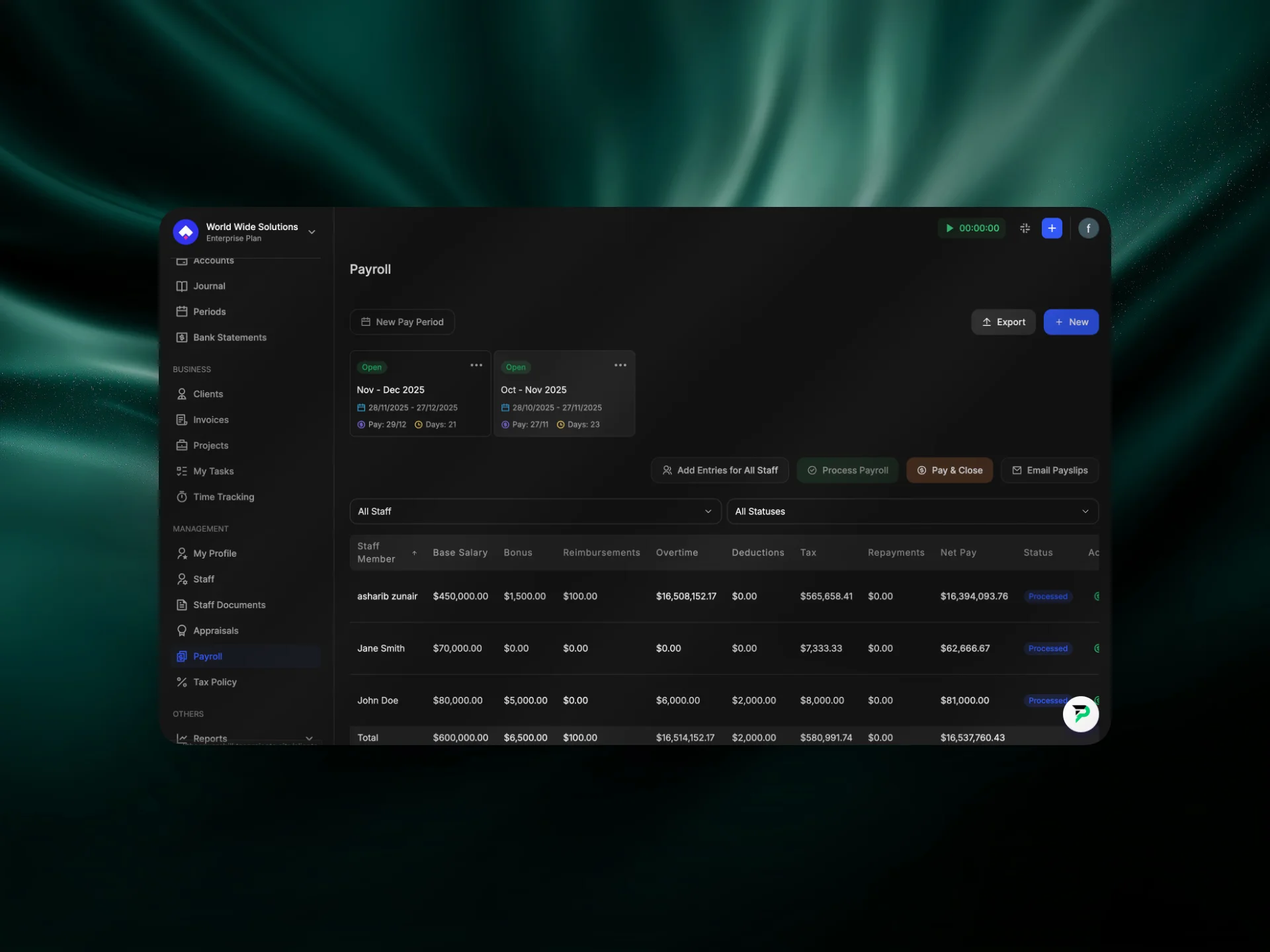
Implementing automation requires a robust platform that meets the unique needs of your organization. An all-in-one accounting solution can unify accounting, payroll, invoicing, and time tracking under one system, reducing complexity and increasing efficiency.
Such platforms simplify setup, provide real-time insights, and allow businesses to scale operations smoothly without juggling multiple software tools.
Conclusion
The shift toward automated financial operations is transforming how businesses manage their finances. By adopting automation, cloud solutions, and integrated analytics, companies can reduce errors, save time, and make smarter strategic decisions.
For businesses seeking a seamless transition to automation, Halal Accounts offers an all-in-one platform that integrates accounting, payroll, invoicing, and time tracking—helping organizations of all sizes operate more efficiently and strategically.

Let’s get started and simplify your administration
Join Halal Accounts to manage your accounts and business better.
Accounting
Staff management
Projects and Tasks
Invoicing and Time Tracking