Emerging Accounting Technologies for Growing Businesses in 2026
As businesses grow, financial management becomes more complex. Tracking transactions, managing payroll, handling invoices, and generating accurate reports require more than spreadsheets or manual bookkeeping. Modern organizations are increasingly adopting advanced accounting technologies to streamline operations and maintain financial accuracy.
Emerging accounting technologies are helping growing businesses automate routine tasks, improve financial visibility, and make faster, data-driven decisions. From cloud accounting platforms to intelligent automation, these tools allow companies to focus more on growth and less on administrative work.
In this article, we explore the most important accounting technologies shaping the future of financial management for growing businesses.
Cloud-Based Accounting Systems
Cloud accounting software has become one of the most transformative innovations in modern finance. Unlike traditional desktop systems, cloud platforms allow businesses to access financial data anytime and from anywhere.
For growing businesses with remote teams or multiple departments, this flexibility is essential. Cloud accounting platforms enable real-time collaboration between managers, accountants, and finance teams. Instead of waiting for monthly reports, stakeholders can instantly view financial performance and make informed decisions.
Additionally, cloud systems automatically update and back up financial records, reducing the risk of data loss and minimizing the need for manual maintenance.
Automation in Financial Operations
Automation is rapidly changing how businesses manage their finances. Tasks that once required hours of manual work—such as invoice generation, expense tracking, and reconciliation—can now be handled automatically.
Automated accounting systems can:
Generate recurring invoices
Track payments in real time
Categorize transactions automatically
Send payment reminders to clients
Produce instant financial reports
By reducing repetitive tasks, automation allows finance teams to focus on strategic planning rather than routine data entry. This not only saves time but also reduces human errors that can impact financial accuracy.
Integrated Business Management Platforms
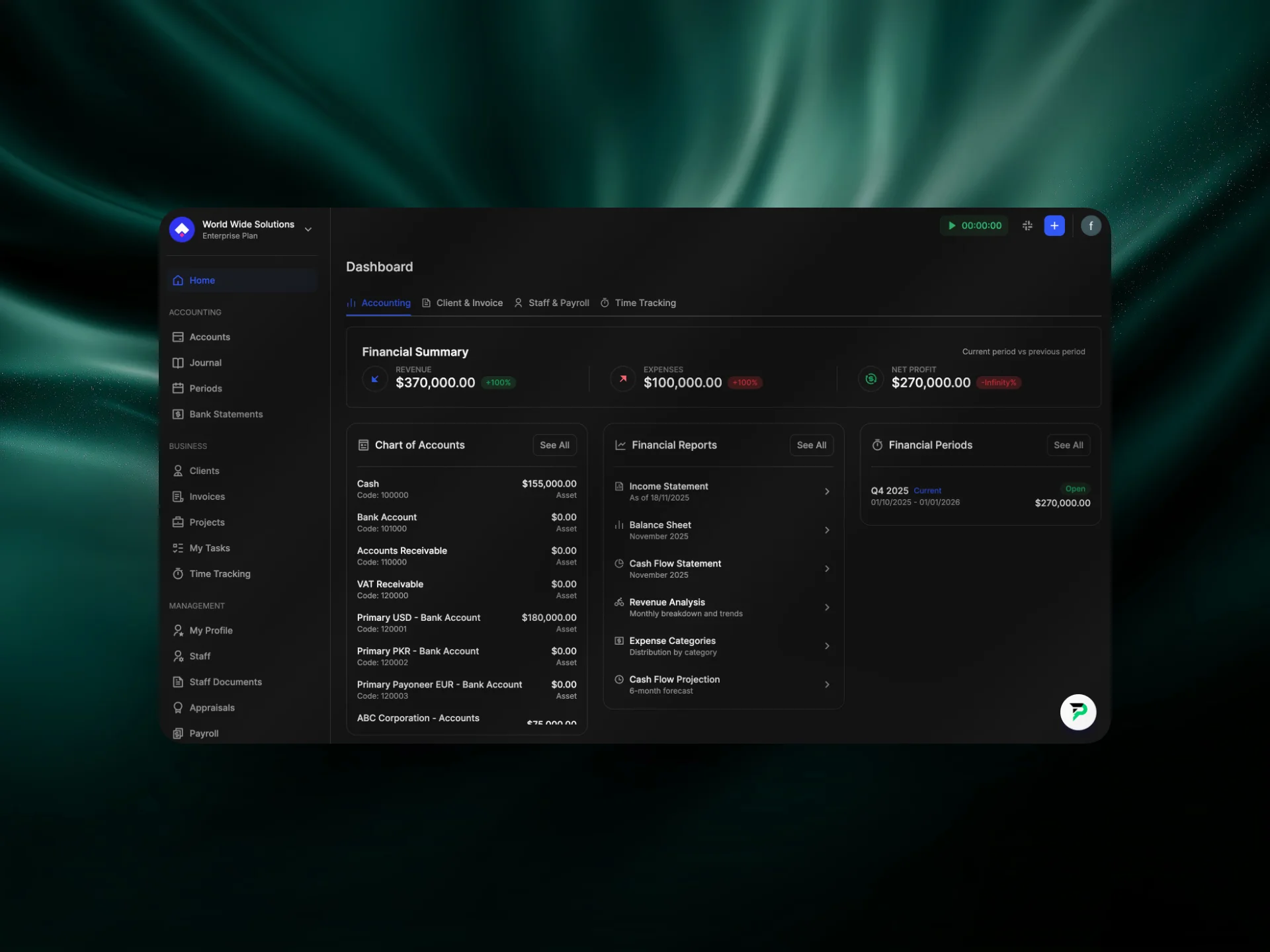
One of the biggest trends in accounting technology is integration. Instead of using separate tools for payroll, project management, invoicing, and accounting, many businesses are moving toward unified platforms.
Integrated systems connect different business functions into a single dashboard. This creates a seamless workflow where financial data automatically syncs with operational activities.
For example:
Time tracking data can be used to directly calculate payroll.
Project hours can automatically generate invoices.
Staff performance metrics can link to payroll and appraisals.
This level of integration improves efficiency while giving businesses a clearer picture of how operations affect financial performance.
Real-Time Financial Insights
Data-driven decision-making has become a key factor in business success. Modern accounting technologies provide real-time insights through interactive dashboards and automated reporting.
Instead of relying on historical reports, business owners can monitor:
Cash flow trends
Profitability by project or client
Expense patterns
Outstanding invoices
With this visibility, businesses can quickly adjust strategies, control costs, and identify new opportunities for growth.
Real-time financial insights also improve forecasting. When companies understand their financial patterns, they can better plan for expansion, hiring, and investments.
Digital Tools for Compliance and Ethical Finance
Another important area of innovation is compliance management. Businesses today must follow tax regulations, financial reporting standards, and industry requirements.
Modern accounting technologies simplify compliance by automatically applying tax rules, maintaining audit trails, and organizing financial records for reporting. This reduces the risk of penalties while improving transparency.
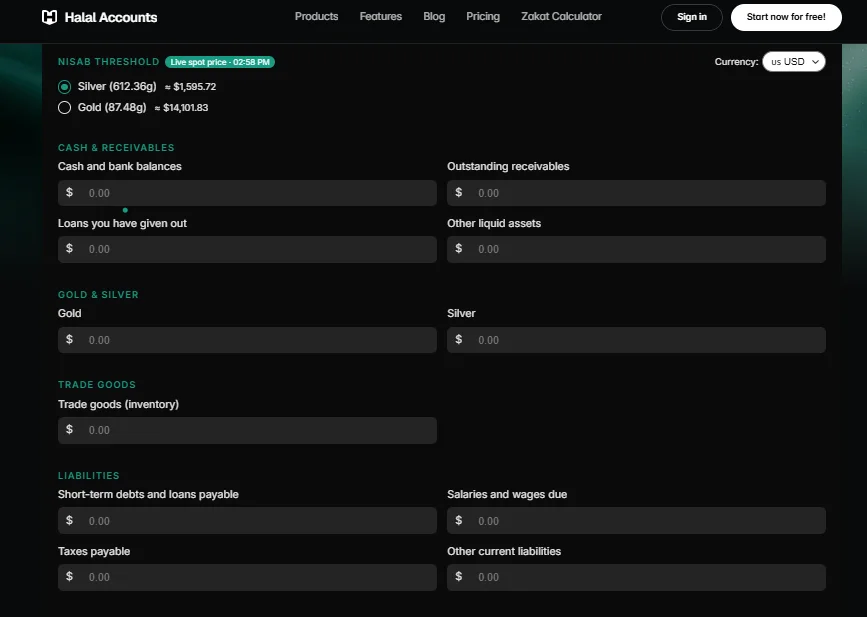
For businesses operating under ethical or faith-based financial principles, specialized digital tools are also emerging. For example, organizations that need to calculate charitable obligations or financial contributions can use tools like a business zakat calculator to ensure their financial responsibilities are handled accurately and efficiently.
These specialized solutions help businesses align financial practices with their values while maintaining organized financial records.
AI and Smart Financial Assistance
Artificial intelligence is beginning to play a significant role in accounting technology. AI-powered tools can analyze financial data, detect unusual transactions, and provide recommendations for improving financial performance.
Some advanced systems can even:
Predict cash flow shortages
Identify cost-saving opportunities
Detect accounting anomalies
Assist with financial forecasting
While AI does not replace accountants, it enhances their capabilities by providing deeper insights and faster analysis.
The Future of Accounting Technology
The future of accounting will be increasingly digital, automated, and integrated. Growing businesses that adopt modern financial tools gain a competitive advantage by improving efficiency and financial accuracy.
Emerging technologies will continue to simplify financial operations, reduce administrative burdens, and provide deeper insights into business performance. Companies that invest in modern accounting systems today will be better prepared to scale and manage their finances effectively.
Conclusion
Emerging accounting technologies are transforming how growing businesses manage their financial operations. From automation and cloud platforms to integrated management systems and real-time analytics, these tools help organizations operate more efficiently and make smarter decisions.
As businesses continue to scale, adopting modern financial solutions becomes essential for maintaining accuracy, transparency, and operational efficiency. Platforms like Halal Accounts demonstrate how modern technology can simplify accounting, payroll, invoicing, and project management within a single streamlined system designed for today’s businesses.

Let’s get started and simplify your administration
Join Halal Accounts to manage your accounts and business better.
Accounting
Staff management
Projects and Tasks
Invoicing and Time Tracking