Why Businesses Are Moving to Unified Finance Platforms

In today’s fast-paced business environment, managing multiple finance systems has become a significant challenge. Companies often juggle separate tools for accounting, payroll, invoicing, HR, and project management, leading to inefficiencies, errors, and fragmented data. As a result, more businesses are moving toward unified finance platforms—comprehensive solutions that integrate all financial and operational functions into a single system. This trend is reshaping how organizations operate, providing better control, transparency, and productivity.
The Problem with Fragmented Systems
Businesses that rely on multiple disconnected tools often face several issues:
Data Silos – Information stored across separate applications can lead to inconsistencies and errors. For example, payroll data may not sync with accounting software, causing delays and miscalculations.
Inefficient Workflows – Switching between multiple systems slows down processes, requiring more manual work and increasing the chance of mistakes.
Limited Insights – Fragmented data makes it difficult for management to get a real-time view of finances, project progress, and staff performance. Decisions based on incomplete or outdated information can be costly.
Compliance Challenges – Managing multiple systems increases the risk of missing important compliance updates or failing to adhere to industry standards, especially for Sharia-compliant or regulated businesses.
Unified finance platforms address all these challenges by consolidating functions like accounts, payroll, invoicing, HR, and project management into one cohesive system.
Benefits of Moving to a Unified Finance Platform
1. Improved Efficiency
Unified platforms streamline workflows by eliminating the need to enter the same information across multiple systems. Invoices, payroll, and employee data are automatically integrated, reducing manual entry and saving valuable time. Businesses can complete tasks faster, allowing teams to focus on strategic growth rather than administrative work.
2. Better Data Accuracy
When all financial and operational data resides in a single system, the risk of errors decreases significantly. Transactions, payroll calculations, and project updates are automatically synchronized, ensuring data integrity. Accurate information allows management to make confident decisions and provides reliable reports for audits or regulatory purposes.
3. Real-Time Insights
Unified finance platforms offer dashboards that consolidate key metrics, giving leaders a real-time view of their organization. From project progress and employee performance to cash flow and revenue trends, these insights enable better financial planning, forecasting, and decision-making. For startups and SMEs, this level of visibility can be transformative.
4. Cost Savings
Maintaining multiple software subscriptions, integrations, and IT support can be expensive. A single, all-in-one platform reduces overhead costs and eliminates the need for complex integrations. Businesses also save time, which indirectly contributes to cost efficiency by allowing teams to focus on revenue-generating activities.
5. Scalability
As businesses grow, their financial and operational needs become more complex. Unified platforms are designed to scale with your organization. Whether managing a handful of employees or thousands of projects, these platforms adapt to increased data volumes, users, and workflows without requiring additional software tools.
6. Compliance and Security
Unified platforms often include built-in compliance features, ensuring that financial and HR processes follow regulations. For businesses operating in specific markets or under Sharia-compliant principles, platforms like Halal Accounts provide tools that uphold integrity, transparency, and audit readiness. Centralized security measures also reduce the risk of data breaches, keeping sensitive financial information safe.
Key Features of a Modern Unified Finance Platform
Businesses moving to unified finance platforms typically look for features such as:
Accounting and Journals – Centralized bookkeeping and reporting
Payroll and Staff Management – Automated salary calculations, appraisals, and tax compliance
Invoicing and Payment Tracking – Simplified billing with integration to payment gateways
Project and Time Tracking – Track tasks, deadlines, and team productivity in one system
Reporting and Analytics – Generate actionable insights with real-time data dashboards
Platforms like Halal Accounts combine all these functionalities while ensuring compliance with Islamic finance principles, making it easier for Muslim-owned businesses to operate efficiently without compromising on values.
Why Businesses Are Making the Switch
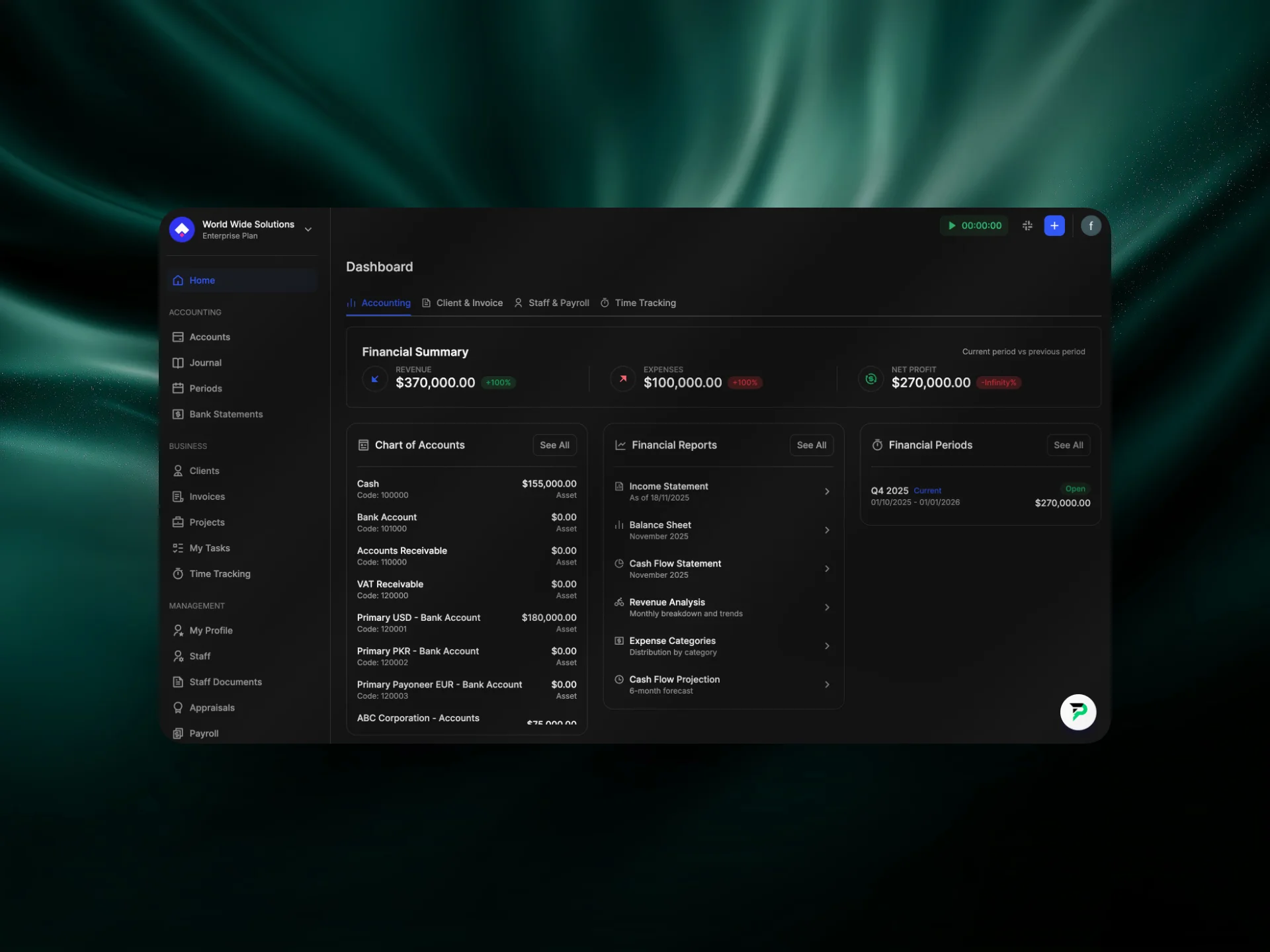
The shift toward unified finance platforms is driven by the need for efficiency, accuracy, and scalability. Companies recognize that traditional fragmented systems slow growth, create errors, and limit visibility. By centralizing all business functions, organizations can:
Save time and reduce manual tasks
Improve financial decision-making with real-time data
Ensure compliance and audit readiness
Scale operations without adding software complexity
Provide a seamless experience for employees and managers
For businesses operating in niche or regulated markets, the benefits extend beyond efficiency. Unified platforms designed with ethical or industry-specific compliance in mind allow leaders to focus on growth while maintaining integrity.
Conclusion
The move toward unified finance platforms is more than a trend—it’s a strategic necessity for businesses seeking to streamline operations, improve data accuracy, and gain real-time insights. With integrated tools for accounting, payroll, invoicing, HR, and project management, organizations can reduce costs, scale efficiently, and focus on their core mission.
For Muslim-owned businesses seeking a comprehensive, Sharia-compliant finance solution, platforms like Halal Accounts provide an all-in-one system built to enhance productivity, simplify administration, and support ethical business practices.

Let’s get started and simplify your administration
Join Halal Accounts to manage your accounts and business better.
Accounting
Staff management
Projects and Tasks
Invoicing and Time Tracking