The Hidden Financial Management Mistake That’s Slowing Business Growth in 2026

Many businesses believe financial struggles happen because of low sales, rising expenses, or market competition. In reality, one of the biggest hidden problems is poor financial organization and outdated systems. Companies that fail to manage finances efficiently often experience delayed decisions, cash flow issues, payroll mistakes, and operational confusion. In 2026, businesses searching for the best Islamic finance software compliance tracking solutions are realizing that modern financial management is no longer optional — it is essential for sustainable growth.
The way businesses handle accounting, payroll, invoicing, and reporting has changed dramatically over the last few years. Companies still relying on spreadsheets or disconnected tools are finding it increasingly difficult to stay competitive in a fast-moving digital economy.
Why Financial Management Becomes Difficult as Businesses Grow
In the early stages, businesses often manage finances manually because operations are relatively simple. But as clients, employees, invoices, and transactions increase, financial processes become more complicated.
This usually leads to:
Missing financial data
Delayed reports
Human errors
Poor cash flow visibility
Payroll complications
Unorganized records
Missed payment tracking
Many business owners focus heavily on sales and marketing while ignoring the systems needed to support long-term operational growth.
The result is financial chaos behind the scenes.
The Real Hidden Problem: Disconnected Systems
One of the biggest reasons businesses struggle financially is that their operations are spread across multiple disconnected tools.
For example, companies often use separate platforms for:
Accounting
Payroll
Staff management
Project tracking
Invoicing
Time tracking
This creates unnecessary complexity and forces employees to constantly switch between systems.
Disconnected workflows often cause:
Duplicate data entry
Inconsistent records
Reporting delays
Communication gaps
Increased administrative workload
Without centralized management, businesses lose valuable time every week handling repetitive tasks manually.
Manual Processes Create Expensive Mistakes
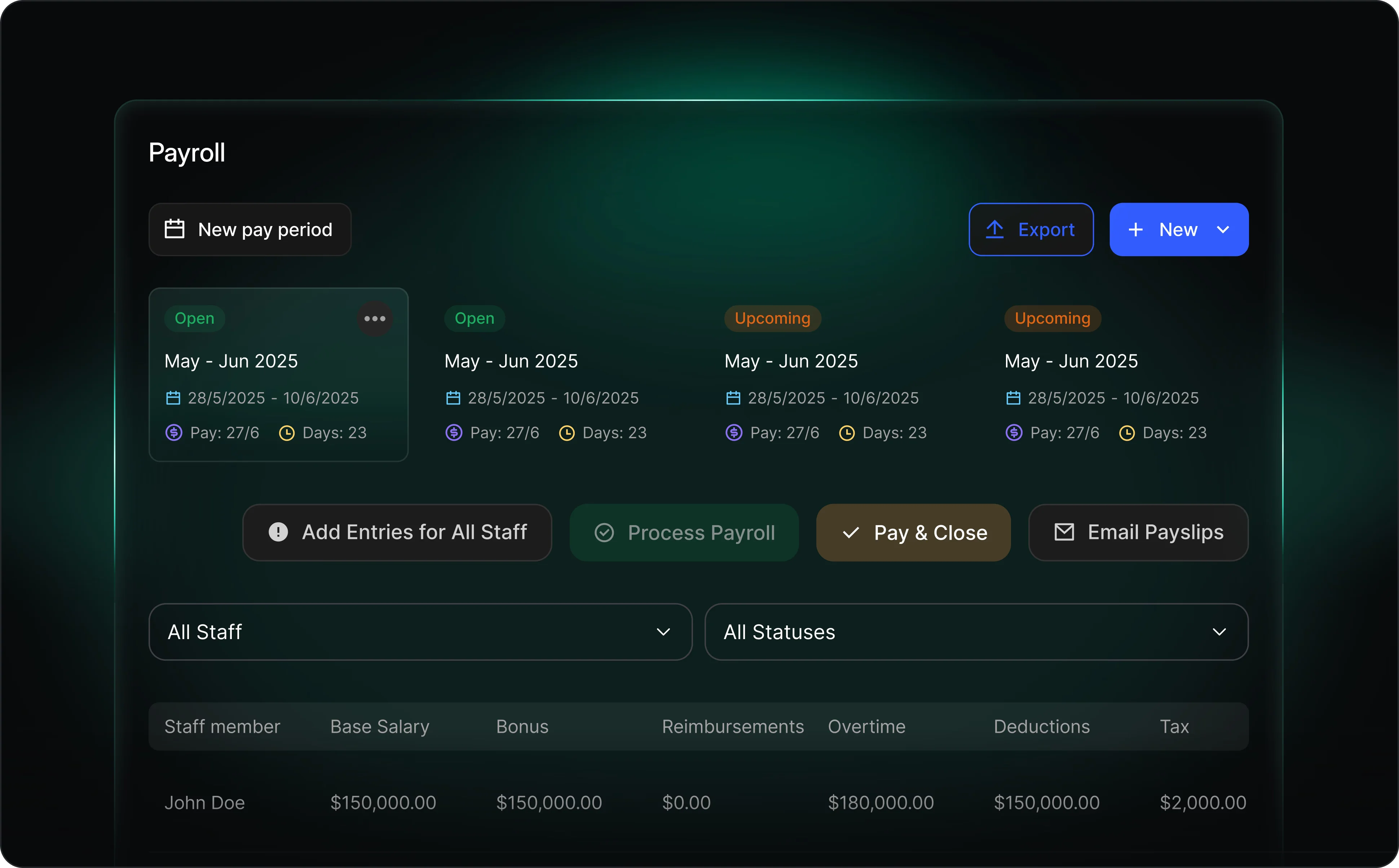
Traditional financial management methods rely heavily on manual work.
Common issues include:
Spreadsheet formula errors
Incorrect salary calculations
Lost invoices
Delayed payment follow-ups
Missing expense records
Tax reporting mistakes
Even small accounting errors can lead to serious financial consequences over time.
Modern businesses require automation to reduce risks and improve operational accuracy.
Why Real-Time Visibility Matters
Business owners cannot make smart decisions without accurate financial visibility.
Many companies struggle because they do not have instant access to:
Revenue reports
Profit margins
Outstanding payments
Payroll expenses
Project profitability
Cash flow summaries
Delayed reporting often results in poor decision-making and missed growth opportunities.
This is why businesses are increasingly adopting modern Islamic finance software solutions that provide centralized financial management and real-time reporting capabilities.
The Growing Importance of Automation in 2026
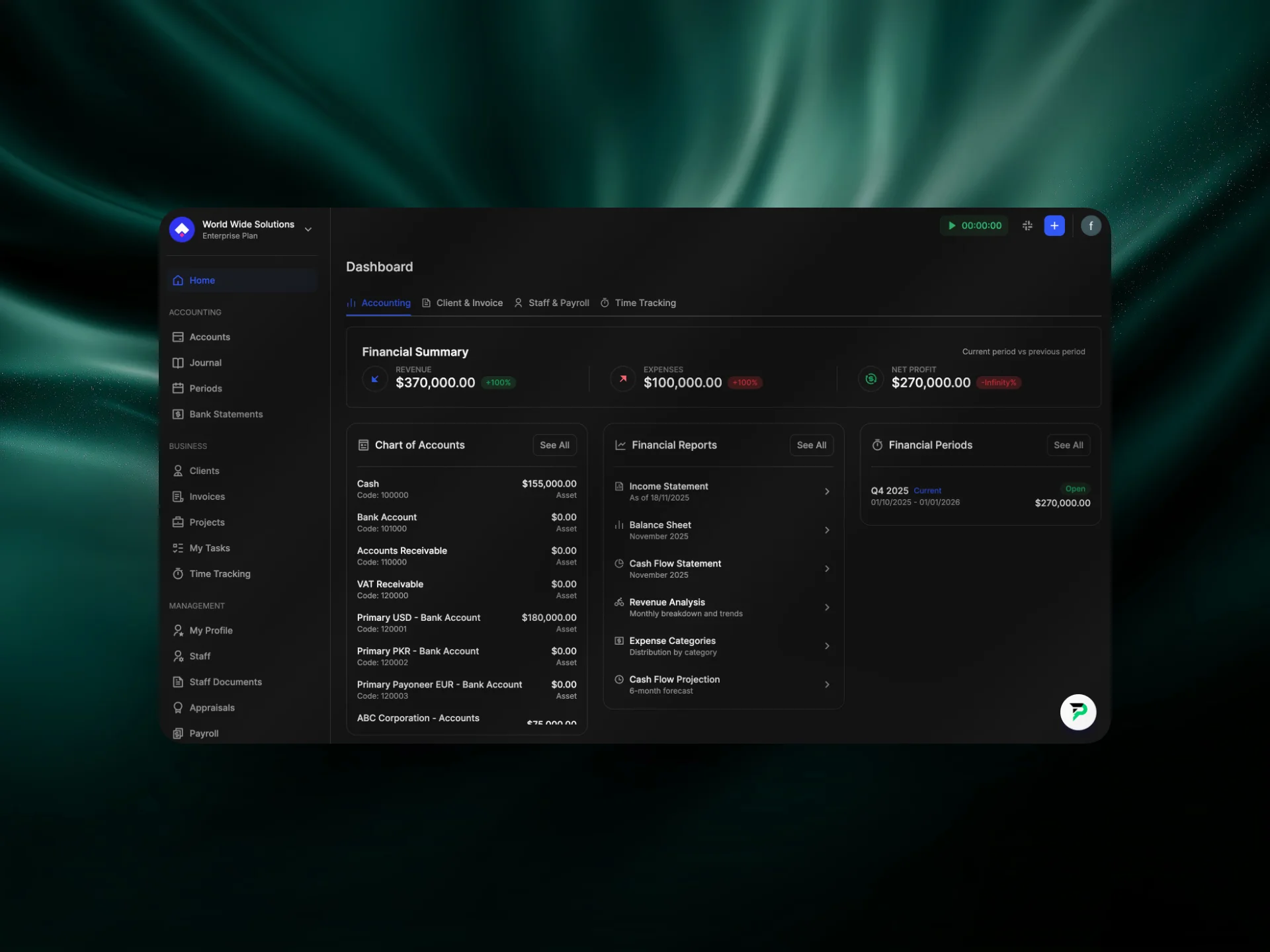
Financial management is no longer just about bookkeeping. Businesses today need systems that can automate repetitive processes and improve operational efficiency.
Automation helps businesses:
Save administrative time
Improve accuracy
Reduce human error
Simplify payroll
Streamline invoicing
Improve reporting speed
Organize financial records
Companies that continue relying on outdated systems often struggle to scale efficiently.
Businesses Need More Than Basic Accounting Software
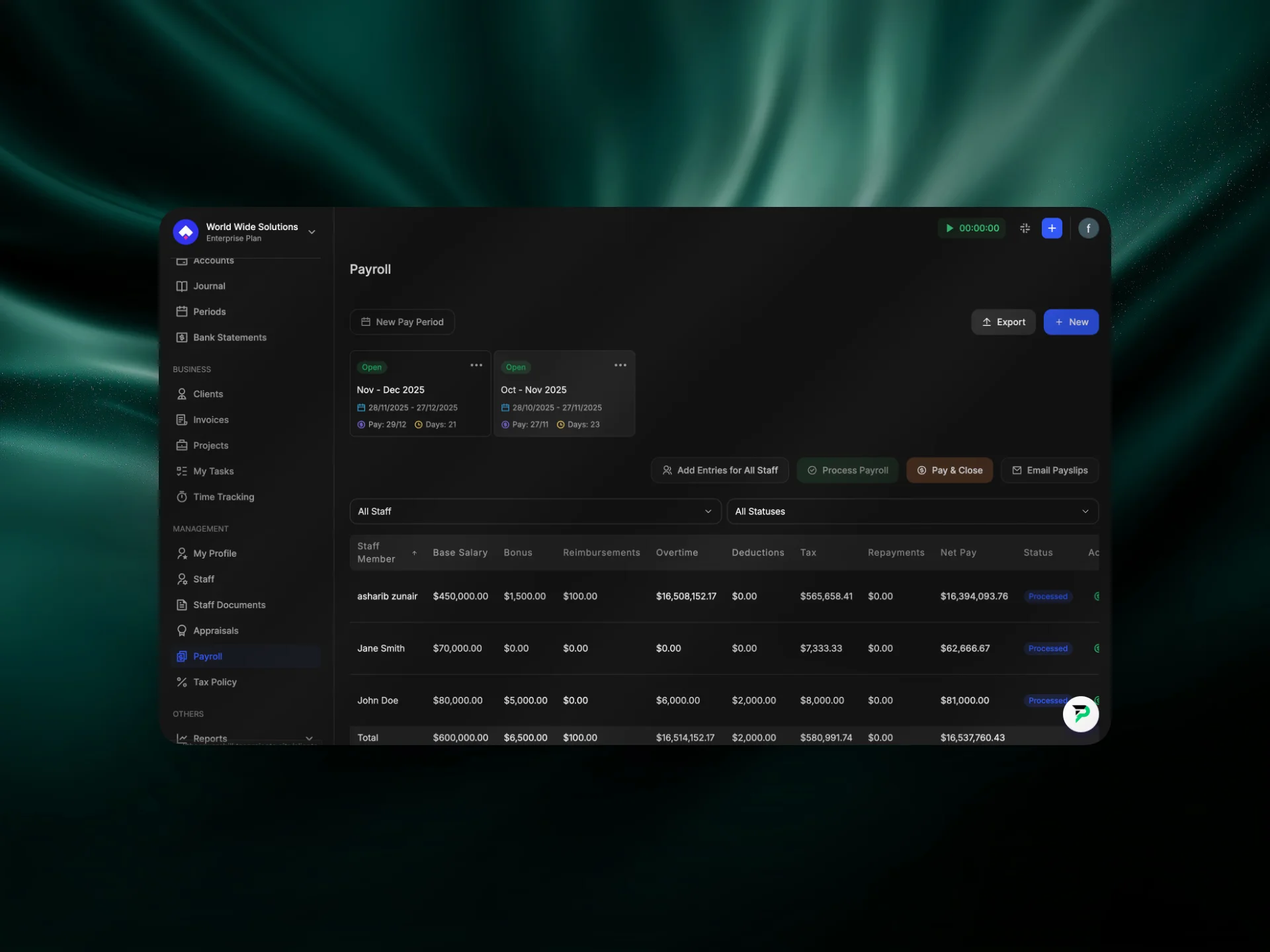
Modern businesses require integrated platforms that combine multiple functions into one ecosystem.
Instead of using separate tools, companies now prefer systems that include:
Accounting and journals
Payroll processing
Staff management
Invoice tracking
Project management
Time tracking
Appraisals and HR records
Centralized systems simplify workflows while improving team productivity.
How Financial Inefficiency Impacts Growth
Poor financial organization affects nearly every part of a business.
Some common long-term effects include:
Reduced Productivity
Employees spend too much time handling repetitive administrative work.
Slower Decision-Making
Without accurate reports, leadership teams struggle to plan effectively.
Cash Flow Problems
Late invoices and poor payment tracking create financial instability.
Payroll Delays
Manual payroll systems increase the risk of salary errors and delays.
Poor Customer Experience
Disorganized invoicing and operations can reduce client trust.
Over time, these problems limit business growth and scalability.
Modern Accounting Systems Are Changing Business Operations
Current accounting software trends show that businesses are rapidly moving toward automation, cloud-based systems, and integrated ERP platforms.
Companies now prioritize software that offers:
Real-time reporting
Automated invoicing
Payment gateway integration
Staff and payroll management
Secure financial records
Project tracking
AI-powered automation
Businesses are no longer looking for simple bookkeeping tools. They want complete operational management systems.
How Halal Accounts Support Modern Businesses
Halal Accounts is designed to help Muslim-owned businesses simplify financial management while remaining aligned with Islamic principles.
The platform combines essential business operations into one organized system, including:
Accounting and journals
Payroll and HR management
Invoice and payment tracking
Project and task management
Time tracking
Staff appraisals
Financial reporting
By centralizing operations, Halal Accounts helps businesses reduce manual work, improve efficiency, and gain better financial visibility.
Its scalable structure makes it suitable for startups, growing businesses, and larger organizations looking for long-term operational stability.
Final Thoughts
The hidden reason many businesses struggle financially is not always low revenue — it is inefficient systems, disconnected workflows, and outdated manual processes. Companies that fail to modernize financial management often lose valuable time, productivity, and growth opportunities.
Businesses that adopt centralized and automated platforms can improve reporting, simplify payroll, manage projects more effectively, and scale operations with greater confidence. In today’s competitive business environment, solutions like halal accounts are helping companies build smarter, faster, and more organized financial systems for long-term success.

Let’s get started and simplify your administration
Join Halal Accounts to manage your accounts and business better.
Accounting
Staff management
Projects and Tasks
Invoicing and Time Tracking