7 Costly Payroll Problems Businesses Face in 2026 — And How Smart Companies Solve Them
Payroll management has become one of the most challenging operational tasks for modern businesses. As teams grow and compliance requirements become more complex, companies are struggling to manage salaries, attendance, taxes, and employee records efficiently. Businesses following payroll automation trends 2026 are now shifting toward smarter payroll systems that reduce manual work, improve accuracy, and save valuable administrative time every month.
For many organizations, payroll issues are not just small administrative inconveniences — they directly impact employee trust, financial stability, and business productivity.
In 2026, businesses can no longer rely on outdated spreadsheets or disconnected systems to handle payroll operations effectively.
Why Payroll Problems Are Becoming More Common

As businesses scale, payroll processes become increasingly difficult to manage manually.
Companies often struggle with:
Salary calculation errors
Late employee payments
Tax miscalculations
Attendance tracking confusion
Unorganized employee records
Overtime mismanagement
Manual payroll reporting
Even small payroll mistakes can damage employee satisfaction and create serious operational issues.
The good news is that modern payroll systems now provide businesses with automated solutions that simplify these processes significantly.
1. Manual Payroll Calculations Cause Costly Errors
One of the biggest payroll problems businesses face is human error.
When salaries are calculated manually, mistakes can happen easily due to:
Incorrect attendance records
Formula errors in spreadsheets
Wrong overtime calculations
Missed deductions
Duplicate entries
Payroll errors not only waste time but can also create trust issues among employees.
Solution
Businesses should move toward automated payroll systems that calculate salaries, deductions, bonuses, and taxes automatically with higher accuracy.
Automation reduces dependency on manual calculations and minimizes costly mistakes.
2. Late Salary Payments Affect Employee Morale
Delayed payroll is one of the fastest ways to reduce employee satisfaction.
Businesses often experience delays because payroll processing involves multiple manual approvals, calculations, and document handling steps.
When salary processing becomes inconsistent, employees may lose confidence in company operations.
Solution
Automated payroll workflows help businesses schedule salary processing in advance while streamlining approvals and payment tracking.
This ensures employees receive payments on time every month.
3. Attendance and Time Tracking Become Difficult
Managing attendance manually becomes overwhelming as businesses grow.
Common challenges include:
Inaccurate timesheets
Missing attendance records
Confusion over leaves and time-offs
Overtime disputes
Poor project hour tracking
Without proper systems, payroll teams spend hours correcting attendance-related issues.
Solution
Integrated time-tracking systems automatically record employee work hours, leaves, and attendance data in real time.
This improves payroll accuracy while reducing administrative workload.
4. Payroll Reporting Takes Too Much Time
Many businesses still generate payroll reports manually using spreadsheets.
This process often involves:
Collecting employee data
Verifying attendance
Cross-checking salary structures
Preparing tax summaries
Updating records manually
The entire process can consume several hours every payroll cycle.
Solution
Modern payroll platforms generate reports instantly, helping businesses monitor payroll expenses, tax information, and employee payment history with minimal effort.
Businesses handling large teams are increasingly adopting payroll processing for accountants solutions to simplify reporting and improve operational efficiency.
5. Employee Records Become Unorganized
As organizations expand, maintaining employee records manually becomes difficult.
Businesses often struggle to organize:
Salary histories
Appraisals
Tax information
Employment contracts
Leave records
Attendance history
Poor record management creates confusion and increases administrative stress.
Solution
Centralized payroll systems securely store employee data in one organized dashboard, making information easier to access and manage.
6. Compliance and Tax Management Become Complicated
Payroll compliance requirements continue evolving, especially for businesses operating across different regions or managing larger teams.
Manual payroll systems increase the risk of:
Incorrect tax calculations
Missed compliance updates
Reporting inconsistencies
Financial penalties
Solution
Automated payroll systems help businesses stay updated with payroll policies, tax structures, and reporting requirements while reducing compliance risks.
7. Multiple Systems Create Workflow Confusion
Many businesses use separate tools for payroll, HR, accounting, attendance tracking, and project management.
This disconnected workflow creates:
Duplicate work
Inconsistent data
Communication gaps
Reporting delays
Reduced efficiency
Managing payroll across different systems wastes time and slows operations.
Solution
Businesses are now investing in integrated ERP platforms that combine payroll, HR, accounting, invoicing, and project management into one system.
Companies looking for greater operational efficiency are increasingly adopting payroll software for accounting professionals to centralize workflows and improve team productivity.
Why Automated Payroll Systems Are Essential in 2026
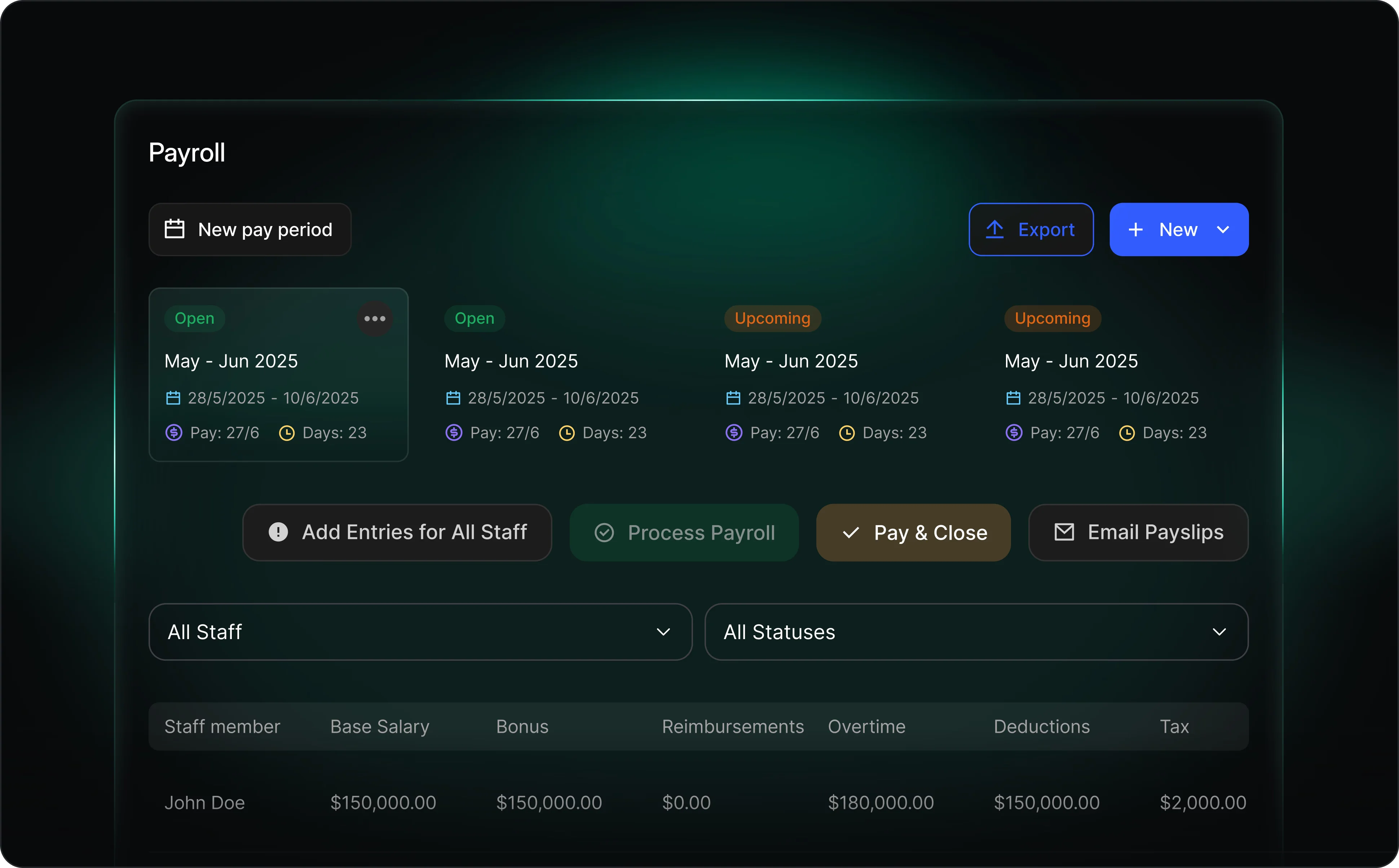
Modern businesses need payroll systems that offer more than just salary calculations.
Today’s organizations require:
Automated payroll processing
Real-time reporting
Staff management
Attendance tracking
Appraisal management
Secure employee records
Integrated accounting features
Automation not only saves time but also helps businesses scale operations more efficiently.
How Halal Accounts Simplifies Payroll Management
Halal Accounts provides a modern solution for businesses that want centralized payroll and financial management while maintaining Islamic business values.
The platform combines:
Payroll and tax policy management
Staff appraisals
Time tracking
Accounting and journals
Invoice management
Project tracking
Staff document organization
With integrated payroll automation and business management tools, Halal Accounts helps companies reduce manual work, improve reporting accuracy, and streamline daily operations.
Its scalable system is designed for startups, SMEs, and larger organizations that need reliable payroll and operational management in one platform.
Final Thoughts
Payroll problems can quickly affect employee trust, productivity, and overall business performance. Companies that continue relying on spreadsheets and disconnected systems often struggle with delays, reporting issues, and costly administrative errors.
Modern businesses need smarter payroll systems that automate repetitive tasks, improve accuracy, and simplify operations. Businesses adopting centralized solutions like halal accounts are positioning themselves for better operational efficiency, stronger employee management, and long-term business growth in 2026.

Let’s get started and simplify your administration
Join Halal Accounts to manage your accounts and business better.
Accounting
Staff management
Projects and Tasks
Invoicing and Time Tracking