The Hidden Cost of Manual Bookkeeping for Businesses

Running a business means balancing multiple responsibilities, and financial management is one of the most critical. Many small and growing businesses still rely on manual bookkeeping methods to record income, expenses, and transactions. While this approach may appear simple and affordable initially, it often creates hidden inefficiencies that can slow business growth and reduce financial accuracy.
Modern cloud accounting platforms like Halal Accounts help businesses manage finances, staff operations, payroll, invoicing, and time tracking within one unified system. Moving from manual bookkeeping to an automated accounting solution is no longer just a convenience — it is becoming essential for scalable and efficient business management.
Why Manual Bookkeeping Can Be Costly
Manual bookkeeping might seem budget-friendly because it usually involves spreadsheets, notebooks, or basic accounting tools. However, the indirect costs associated with manual processes can quickly increase and impact operational efficiency.
Time-Consuming Processes
Recording financial transactions manually requires consistent attention and repetitive effort. Business owners and finance teams often spend several hours updating records, reconciling accounts, and verifying financial data. This valuable time could otherwise be invested in strategic planning, client management, or business expansion.
Higher Risk of Human Error
Manual data entry increases the chances of calculation mistakes, duplicate records, and missing transactions. Even minor errors can result in inaccurate financial statements, poor budgeting decisions, or compliance complications that require significant time to correct.
Limited Financial Insights
Traditional spreadsheets usually lack advanced analytics and real-time reporting features. Without automated dashboards and financial summaries, business owners may struggle to understand cash flow patterns, profit margins, and overall financial performance. Limited visibility often leads to delayed or uncertain decision-making.
Compliance and Regulatory Risks
Managing payroll, tax policies, and financial reporting manually increases the risk of missed deadlines and incorrect filings. Inconsistent record-keeping can lead to penalties, audit challenges, or legal complications that affect business stability and reputation.
Even highly organized manual systems cannot match the accuracy, speed, and analytical capabilities provided by modern accounting technology.
How Modern Accounting Software Solves These Challenges
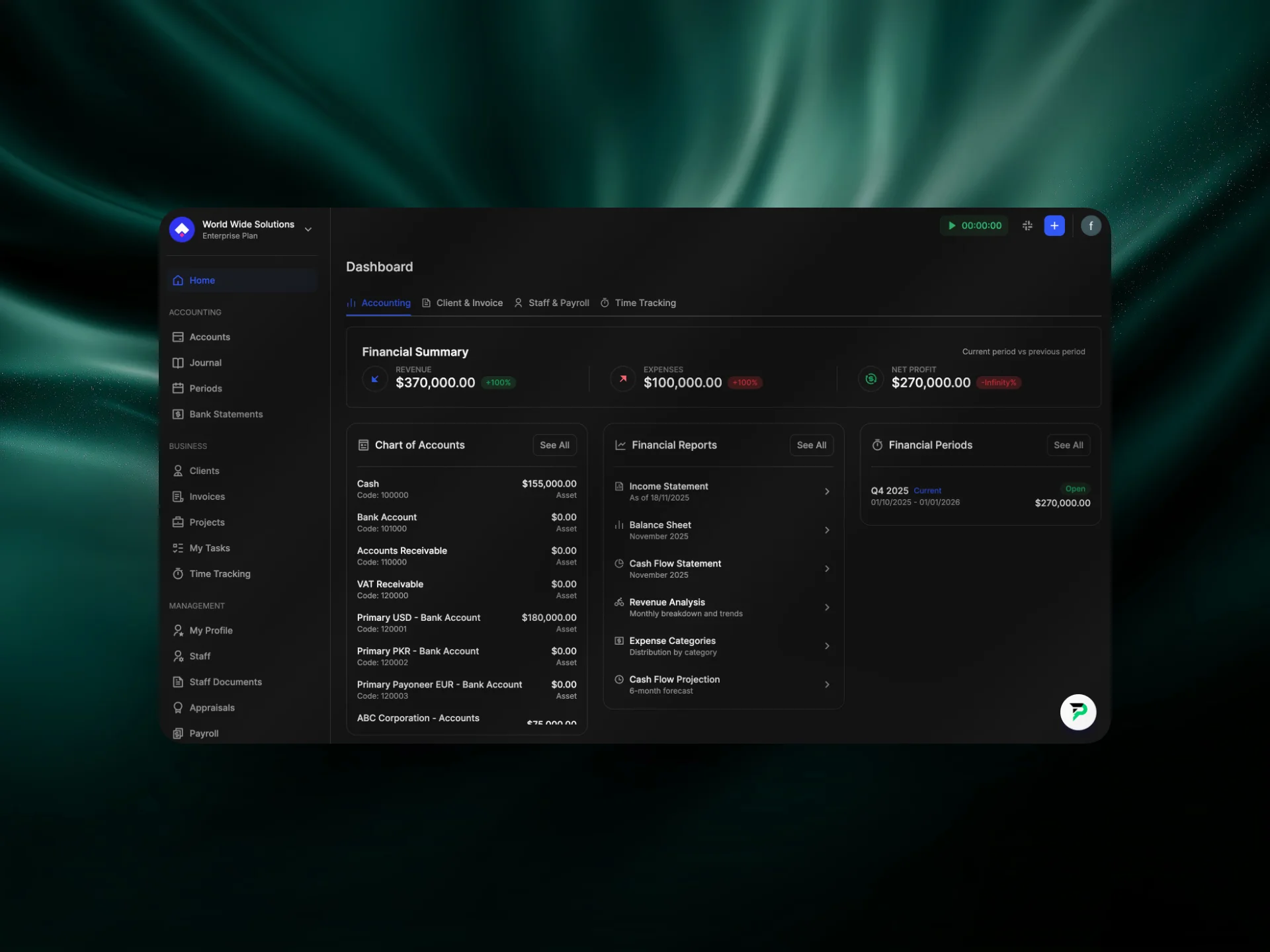
Switching to a modern accounting platform helps businesses eliminate manual limitations while improving productivity, accuracy, and financial transparency.
Automation of Routine Financial Tasks
Cloud accounting solutions automatically record transactions, generate invoices, track expenses, and reconcile bank statements. Platforms like Halal Accounts further simplify operations by combining finance management with payroll, staff tracking, and project time monitoring in a single system. This reduces administrative workload and helps teams operate more efficiently.
Enhanced Accuracy and Error Prevention
Built-in validation systems and automated calculations reduce human errors and ensure financial data remains accurate and audit-ready. Automation also supports consistent record-keeping, which is essential for maintaining compliance and financial clarity.
Real-Time Financial Insights
Modern accounting software provides dashboards and instant reporting tools that allow business owners to monitor cash flow, expenses, and profitability in real time. Access to up-to-date financial data helps businesses make confident and data-driven decisions.
Scalable and Flexible Business Management
As businesses grow, financial workflows become more complex. Cloud accounting software easily scales with increasing transaction volumes, multiple team members, and integrations with payroll, CRM, and project management tools. Solutions like Halal Accounts are specifically designed to support business expansion without adding operational complexity.
Business Benefits of Switching to Automated Accounting
Organizations that transition from manual bookkeeping to automated accounting systems often experience measurable improvements in productivity and performance.
Significant Time Savings
Automation reduces repetitive financial tasks, allowing teams to focus on business strategy, customer relationships, and revenue-generating activities.
Improved Financial Accuracy
Automated calculations and real-time transaction tracking help ensure financial records remain reliable, organized, and consistent.
Better Strategic Decision-Making
Detailed financial reports and performance dashboards help businesses identify growth opportunities, control expenses, and optimize profitability.
Greater Cost Efficiency
Reducing manual errors, avoiding tax penalties, and improving forecasting accuracy helps businesses minimize financial losses and maintain stable growth.
Automated accounting solutions do more than simplify bookkeeping — they create structured financial systems that support long-term operational success.
Final Thoughts
Manual bookkeeping may feel familiar and manageable, but hidden costs related to time consumption, human error, and limited financial visibility can restrict business growth. Adopting modern accounting software allows businesses to streamline operations, gain financial clarity, and build scalable management processes.
Halal Accounts provides an all-in-one accounting and business management solution that integrates finance tracking, staff management, payroll processing, invoicing, and time tracking into one powerful platform. Our goal is to help businesses simplify financial administration, maintain compliance, and focus on sustainable growth.
If you are ready to move beyond manual bookkeeping, adopting an automated accounting solution can transform how your business manages finances and operations.

Let’s get started and simplify your administration
Join Halal Accounts to manage your accounts and business better.
Accounting
Staff management
Projects and Tasks
Invoicing and Time Tracking