How Modern Businesses Are Managing Zakat, Payroll and Accounting From One Platform in 2026
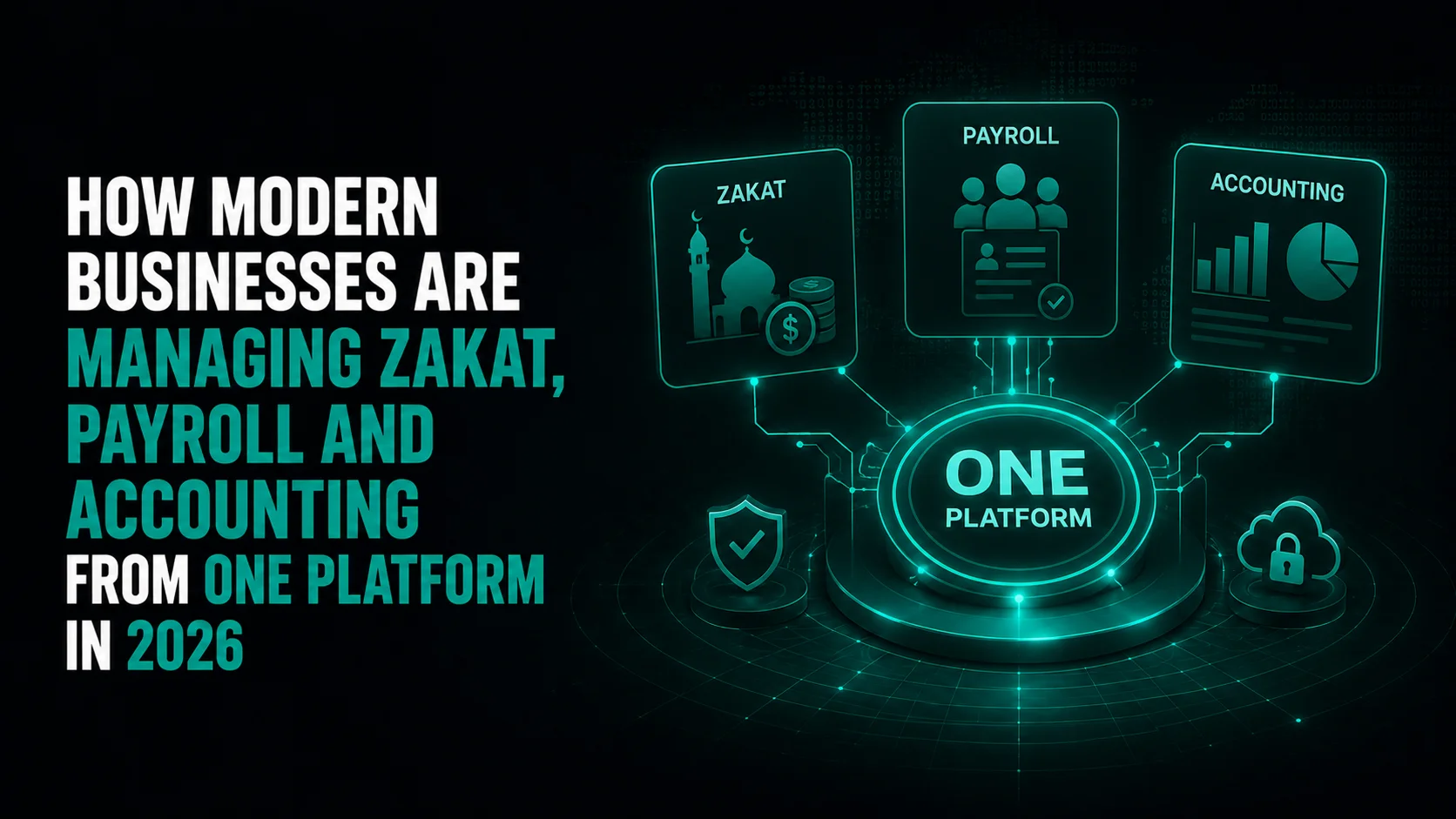
As businesses grow, managing finances becomes increasingly complex. Business owners often find themselves juggling multiple tools for accounting, payroll, staff management, invoicing, and compliance-related responsibilities. For Muslim-owned businesses, the challenge is even greater because financial operations must remain efficient while also aligning with Islamic values. This is why many organizations are now adopting smart cloud payroll software that combines financial management, payroll administration, and operational control within a single platform.
In 2026, companies are moving away from disconnected systems and embracing integrated business management solutions that simplify daily operations while improving productivity and financial transparency.
The Growing Challenge of Managing Multiple Business Functions
Many businesses still rely on separate systems for:
Accounting and bookkeeping
Payroll processing
Employee management
Time tracking
Invoicing
Financial reporting
Compliance management
While these tools may individually perform well, managing them separately often creates unnecessary complexity.
Common challenges include:
Duplicate data entry
Inconsistent records
Reporting delays
Payroll errors
Communication gaps between departments
Increased administrative workload
As organizations expand, these inefficiencies become more noticeable and expensive.
Why Businesses Need a Centralized Platform
Modern businesses require accurate financial data and operational visibility to make informed decisions.
Using one centralized platform helps organizations:
Manage finances more effectively
Reduce manual work
Improve reporting accuracy
Streamline payroll processes
Organize employee information
Increase overall productivity
Instead of switching between multiple applications, teams can access everything they need from a single dashboard.
This saves time while creating a more organized and efficient work environment.
Simplifying Zakat Management Alongside Business Operations
For Muslim-owned businesses, managing Zakat obligations accurately is an important part of financial responsibility.
However, when financial information is spread across multiple systems, calculating business assets and liabilities becomes more difficult.
A centralized accounting platform makes it easier to:
Track financial records
Monitor business assets
Review liabilities
Generate financial statements
Maintain accurate reporting
When financial data is organized and accessible, Zakat calculations become more transparent and manageable.
Businesses benefit from having a complete financial picture without relying on multiple spreadsheets or disconnected reports.
Streamlining Payroll Without Administrative Headaches
Payroll remains one of the most time-consuming tasks for growing businesses.
Organizations often struggle with:
Salary calculations
Attendance management
Leave tracking
Tax policies
Employee records
Appraisal management
Manual payroll processing increases the risk of mistakes and consumes valuable administrative resources.
Modern payroll systems automate many of these tasks, helping businesses:
Process salaries faster
Improve payroll accuracy
Reduce manual calculations
Generate payroll reports instantly
Maintain organized employee records
This allows management teams to focus more on growth and less on repetitive administrative work.
Why Integrated Accounting Is Essential for Growth
Accounting is the foundation of every successful business operation.
Without accurate accounting processes, companies may struggle with:
Cash flow visibility
Financial planning
Profitability tracking
Expense management
Budget forecasting
Compliance reporting
This is why businesses are increasingly adopting an All-in-One Accounting Solution that combines accounting, payroll, invoicing, and reporting into one unified platform.
Integrated accounting systems eliminate unnecessary complexity while providing real-time financial insights.
Better Employee Management Through Centralized Systems
As businesses expand, managing employees effectively becomes increasingly important.
Modern organizations need more than payroll software. They also need tools that support employee development and performance monitoring.
A centralized Performance Management System for Teams helps businesses:
Conduct employee appraisals
Monitor productivity
Track goals and objectives
Maintain performance records
Support professional development
Having these functions integrated with payroll and accounting systems improves operational efficiency and provides better visibility into workforce performance.
The Benefits of Managing Everything From One Platform
Businesses that consolidate operations into one system experience several advantages.
Improved Accuracy
Centralized data reduces duplication and minimizes human error.
Faster Reporting
Financial and operational reports can be generated instantly.
Better Decision-Making
Real-time visibility helps leadership teams make informed choices.
Increased Productivity
Employees spend less time switching between systems and more time focusing on meaningful work.
Reduced Administrative Costs
Automation decreases the need for manual processes and repetitive tasks.
Enhanced Scalability
Businesses can grow without constantly adding new software solutions.
How Halal Accounts Support Modern Business Operations
Halal Accounts was built specifically to help Muslim-owned businesses manage operations efficiently while staying aligned with Islamic principles.
The platform combines essential business functions into one centralized system, including:
Accounting and journals
Payroll and tax policy management
Staff appraisals
Time tracking
Project management
Invoice and payment tracking
Employee records management
Financial reporting
By bringing these capabilities together, businesses can simplify administration and gain better control over their operations.
Whether managing a small startup or a growing organization, having one integrated platform reduces complexity and supports long-term business growth.
Why Integrated Business Management Is the Future
The business environment is becoming more competitive every year. Companies that rely on disconnected systems often struggle with inefficiencies, reporting delays, and operational bottlenecks.
Integrated platforms help businesses:
Improve workflow efficiency
Increase financial visibility
Automate repetitive processes
Strengthen employee management
Simplify compliance and reporting
Support sustainable growth
As digital transformation continues, centralized business management solutions are becoming essential rather than optional.
Final Thoughts
Managing Zakat, payroll, accounting, employee records, and business operations separately can create unnecessary complexity and slow growth. Modern businesses need connected systems that provide visibility, automation, and efficiency across every department.
Organizations looking to simplify operations while maintaining strong financial management are increasingly turning to Halal Business Management Software that integrates accounting, payroll, staff management, invoicing, and reporting into a single, powerful platform.

Let’s get started and simplify your administration
Join Halal Accounts to manage your accounts and business better.
Accounting
Staff management
Projects and Tasks
Invoicing and Time Tracking