AI in Accounting 2026: How Automation is Transforming Halal Finance
Introduction
The accounting world is evolving faster than ever. In 2026, artificial intelligence (AI) is no longer a future concept—it’s a core part of how businesses manage finances, payroll, and operations. From automating repetitive tasks to delivering real-time financial insights, AI is reshaping accounting into a smarter, faster, and more reliable system.
For Muslim-owned businesses, this transformation goes even further. The need for Shariah-compliant financial management means adopting technology that not only improves efficiency but also aligns with Islamic principles. This is where modern solutions like Halal ERP systems are making a real impact.
What is AI in Accounting?
AI in accounting refers to the use of advanced technologies like machine learning, automation, and data analytics to handle financial processes. Instead of manually entering data or reconciling transactions, AI-powered systems can:
Automatically record financial transactions
Generate real-time reports
Detect errors and anomalies
Forecast financial trends
This reduces human error and allows businesses to focus on strategy rather than repetitive tasks.
Key Ways AI is Transforming Accounting in 2026
1. Automation of Routine Tasks
Manual bookkeeping is quickly becoming outdated. AI now automates:
Data entry
Invoice processing
Expense tracking
Bank reconciliation
This not only saves time but also significantly reduces errors. Businesses can now manage their accounts with minimal manual effort.
2. Real-Time Financial Insights
AI-driven systems provide instant access to financial data. Instead of waiting for monthly reports, business owners can:
Monitor cash flow in real-time
Track profits and expenses instantly
Make faster, data-driven decisions
This level of visibility is essential for growing businesses in a competitive market.
3. Smarter Payroll and HR Management
Managing payroll manually can be complex and error-prone. AI simplifies this by:
Automating salary calculations
Managing tax policies
Tracking employee performance and appraisals
With integrated systems, businesses can handle payroll, HR, and performance management in one place.
4. Intelligent Invoicing and Payment Tracking
AI enhances invoicing by:
Automatically generating invoices
Sending payment reminders
Tracking payment status in real-time
This ensures faster payments and better cash flow management.
5. Predictive Financial Planning
One of the biggest advantages of AI is predictive analytics. Businesses can:
Forecast revenue and expenses
Identify financial risks early
Plan budgets more effectively
This turns accounting from a reactive process into a proactive strategy tool.
Why Halal Businesses Need AI-Powered Accounting
For Muslim entrepreneurs, financial management must comply with Islamic principles such as transparency, fairness, and avoiding interest (riba). Traditional accounting tools often overlook these requirements.
AI-powered halal accounting solutions solve this by offering:
Ethical financial tracking
Transparent reporting
Compliance with Islamic financial principles
This ensures businesses grow without compromising their values.
The Role of All-in-One ERP Systems
Modern accounting is no longer limited to numbers. Businesses need integrated systems that connect finance with operations. This is where all-in-one ERP platforms come in.
A complete ERP system combines:
Accounting and journals
Payroll and HR
Time tracking and project management
Invoicing and payment systems
Instead of using multiple tools, businesses can manage everything in one centralized platform.
How Halal Accounts is Leading This Transformation
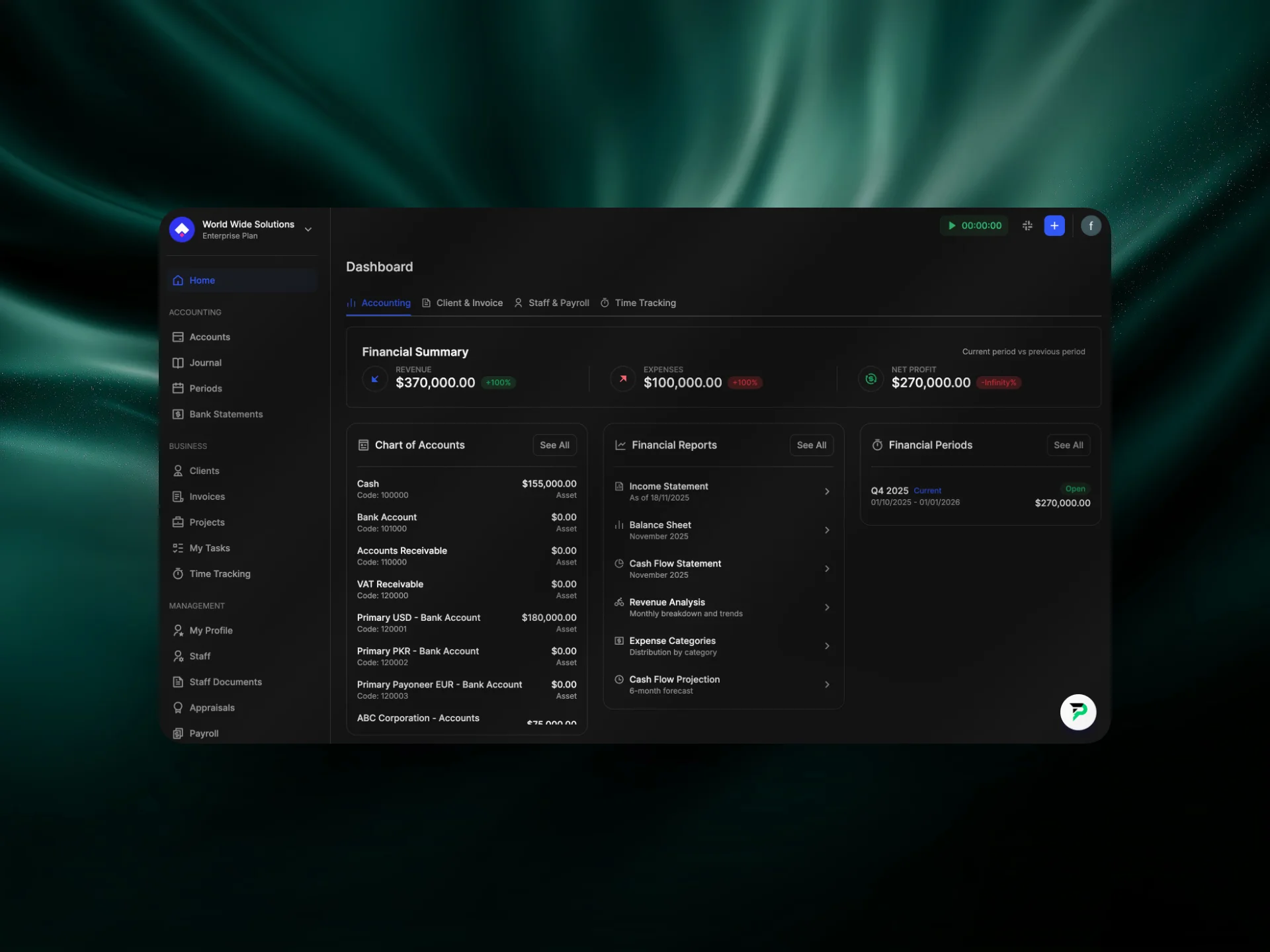
Halal Accounts is designed specifically for Muslim-owned businesses that want to embrace modern technology without compromising their principles.
With built-in automation and smart features, Halal Accounts allows you to:
Manage accounts, payroll, and HR in one place
Automate invoicing and payment tracking
Track time, projects, and employee performance
Generate accurate financial reports instantly
Its cloud-based system ensures you can access your business data anytime, anywhere—while maintaining full transparency and control.
Benefits of AI Accounting for Your Business
Adopting AI-powered accounting systems like Halal Accounts brings multiple advantages:
Efficiency
Automate repetitive tasks and save valuable time.
Accuracy
Reduce human errors with intelligent automation.
Scalability
Easily manage growing business operations.
Cost Savings
Lower operational costs by reducing manual work.
Compliance
Maintain ethical and halal financial practices.
The Future of Accounting is Smart and Ethical
As AI continues to evolve, accounting will become even more intelligent and automated. Businesses that adopt these technologies early will have a clear competitive advantage.
However, for Muslim-owned businesses, success is not just about growth—it’s about growing the right way. Combining AI with halal principles ensures long-term sustainability, trust, and ethical success.
Conclusion
AI is transforming accounting in 2026 by making financial management faster, smarter, and more reliable. From automation to real-time insights, businesses now have the tools to operate more efficiently than ever before.
For those looking to align innovation with Islamic values, adopting a halal-compliant ERP system, Halal Accounts is the next logical step. Platforms like Halal Accounts provide the perfect balance between modern technology and ethical finance—helping businesses scale with confidence and integrity.

Let’s get started and simplify your administration
Join Halal Accounts to manage your accounts and business better.
Accounting
Staff management
Projects and Tasks
Invoicing and Time Tracking