10 Warning Signs Your Business Has Outgrown Spreadsheets in 2026
Running a business with spreadsheets may work in the beginning, but as operations grow, manual systems often become slow, risky, and difficult to manage. Many businesses still rely on disconnected sheets for payroll, invoicing, project tracking, and financial reporting — only to realize later that they are losing time, money, and productivity. If your company is facing delays, reporting issues, or workflow confusion, it may be time to upgrade from spreadsheets to a smarter business management solution. Businesses searching for better financial visibility are now turning toward tools like a zakat calculator for business to simplify Islamic financial management while keeping operations compliant and organized.
Why Businesses Are Moving Beyond Spreadsheets
Spreadsheets were never designed to manage modern business operations at scale. They require constant manual updates, are prone to human error, and become difficult to maintain when teams grow. In 2026, businesses need automation, real-time reporting, integrated payroll, invoicing, and project management systems to remain competitive.
Modern accounting and ERP platforms help businesses centralize operations, improve collaboration, and reduce costly mistakes.
Here are the biggest warning signs your business has officially outgrown spreadsheets.
1. Your Team Keeps Making Manual Errors
One small formula mistake can create major accounting problems. When multiple employees edit spreadsheets, errors become almost impossible to track.
Common issues include:
Incorrect financial calculations
Duplicate entries
Missing invoices
Payroll mistakes
Broken formulas
These errors waste time and can damage client trust. Automated accounting systems reduce manual input and improve accuracy.
2. Financial Reporting Takes Too Long
If generating reports takes hours or even days, your system is slowing down business growth.
Business owners today need:
Real-time cash flow reports
Profit and loss statements
Expense tracking
Tax summaries
Project profitability insights
Spreadsheets often require manual consolidation from different files, creating delays and inconsistencies.
3. You’re Using Multiple Tools for Simple Tasks
Many businesses use separate tools for:
Accounting
Payroll
HR
Invoicing
Time tracking
Project management
Managing multiple disconnected systems creates confusion and duplicate work. That’s why companies are now adopting an all-in-one ERP system that centralizes business operations into a single platform.
An integrated system improves workflow efficiency and keeps all departments aligned.
4. Payroll Has Become Difficult to Manage
As your team grows, payroll becomes more complex. Handling salaries manually through spreadsheets increases the risk of late payments, tax miscalculations, and compliance issues.
Businesses with expanding teams need automation for:
Salary management
Appraisals
Tax policies
Attendance tracking
Time-off management
A modern payroll solution saves hours of administrative work every month.
5. Your Invoices Are Hard to Track
If you constantly chase unpaid invoices or struggle to monitor payment statuses, spreadsheets are likely limiting your efficiency.
Growing businesses require:
Automated invoice generation
Payment reminders
Payment gateway integration
Invoice history tracking
Real-time payment updates
Automated invoicing helps businesses improve cash flow and reduce delays.
6. Collaboration Between Teams Is Becoming Messy
Spreadsheets become difficult to manage when multiple departments need access simultaneously.
Problems usually include:
Version conflicts
Missing data
Unauthorized edits
Confusing file structures
Delayed updates
A centralized business management platform allows teams to collaborate securely with controlled access and real-time updates.
7. You Can’t Easily Track Employee Productivity
Modern businesses need visibility into how projects and employees are performing.
Without proper systems, it becomes difficult to monitor:
Task progress
Billable hours
Deadlines
Team workload
Project completion rates
Integrated time-tracking and project-management tools provide better operational visibility and improve productivity.
8. Your Business Data Is Scattered Everywhere
If your financial data, HR records, invoices, and project files are stored across multiple spreadsheets and apps, decision-making becomes harder.
Centralized systems help businesses:
Access information faster
Reduce data duplication
Improve reporting accuracy
Maintain organized records
Scale operations more efficiently
A connected platform allows leadership teams to make smarter decisions using accurate data.
9. Scaling Operations Feels Overwhelming
As businesses grow, spreadsheets become harder to maintain. More clients, projects, employees, and transactions create operational bottlenecks.
Scaling successfully requires systems that can handle:
Higher transaction volumes
Larger teams
Multiple departments
Client management
Automated workflows
Manual spreadsheet management often limits business expansion.
10. You Need Better Compliance and Audit Tracking
Businesses today need organized financial records and transparent audit trails.
Spreadsheets make it difficult to:
Track edits
Maintain accounting history
Manage approvals
Monitor compliance
Store financial records securely
Modern business software offers audit tracking, secure permissions, and organized reporting that simplify compliance management.
How Halal Accounts Help Businesses Scale Efficiently
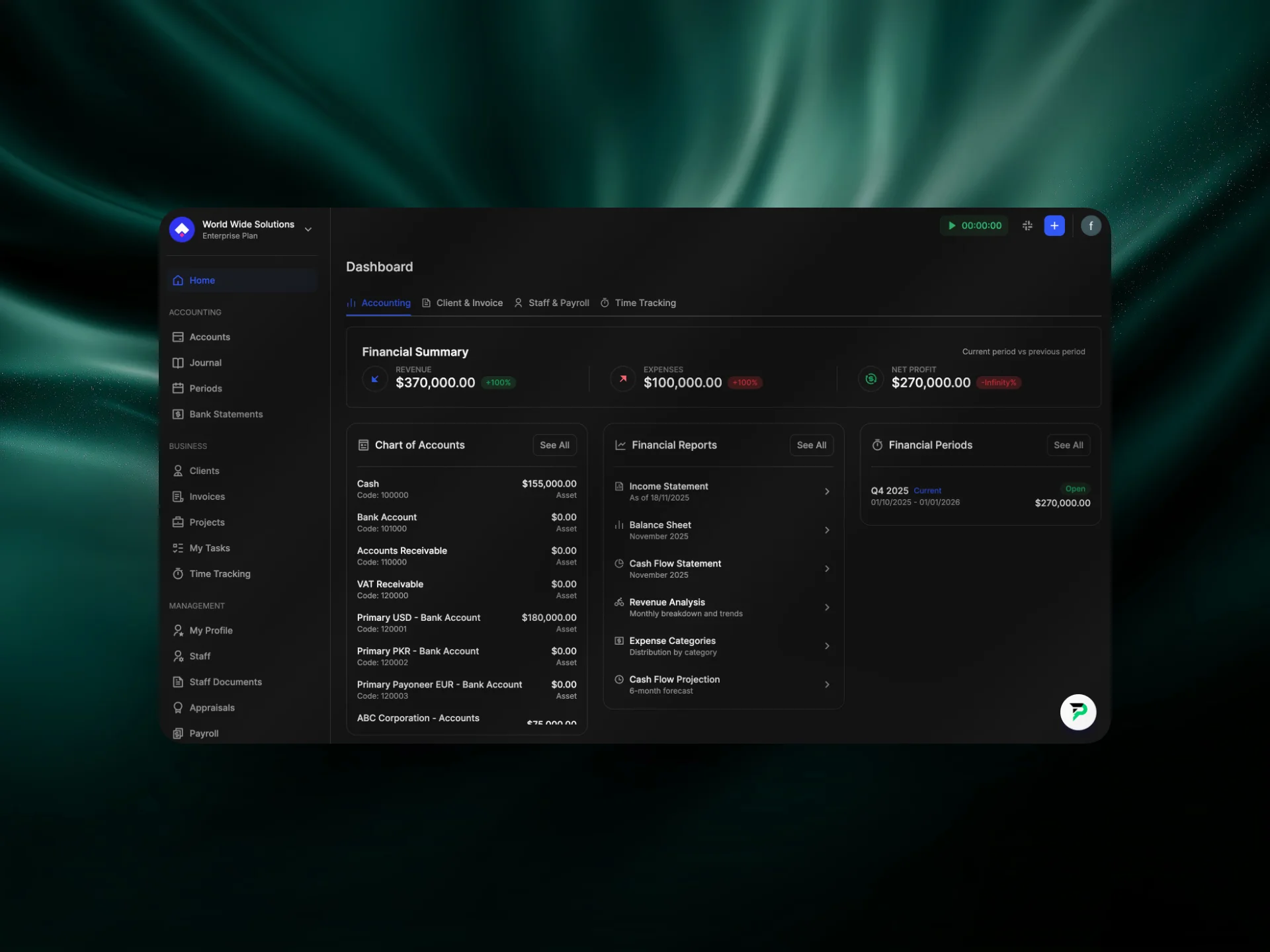
Halal Accounts is designed specifically for Muslim-owned businesses that want modern business management tools without compromising Islamic principles.
The platform combines:
Accounting and journals
Payroll and HR management
Invoice and payment tracking
Time tracking
Project management
Staff appraisals
Financial reporting
Unlike traditional systems, Halal Accounts provides a unified workspace where businesses can manage operations efficiently from one dashboard.
Its scalable pricing structure also makes it suitable for startups, growing businesses, and large organizations alike.
Businesses seeking smarter automation and streamlined operations are increasingly adopting payroll processing software for accountants to eliminate repetitive administrative work and improve financial accuracy.
Final Thoughts
Spreadsheets may work for small operations, but growing businesses eventually need automation, scalability, and centralized control. If your company is experiencing reporting delays, payroll issues, invoicing confusion, or operational inefficiencies, it may be time to move toward a smarter ERP and accounting solution.
Modern platforms like halal accounts help businesses manage finances, staff, projects, and invoicing in one organized ecosystem — allowing teams to focus more on growth and less on manual administration.

Let’s get started and simplify your administration
Join Halal Accounts to manage your accounts and business better.
Accounting
Staff management
Projects and Tasks
Invoicing and Time Tracking